
“Good enough” isn't good enough with brain radiosurgery.
Radiation exposure to healthy brain tissue can be linked to cognitive decline and loss of executive function. In the treatment of multiple brain metastases — the most common SRS indication — not all delivery systems are created equal. When analyzing how patients are most often treated in actual clinical practice (avoiding the idealized simulation setting), the volume of uninvolved brain receiving unwanted dose can vary dramatically.
The data is striking.
| Whole-Brain Dose | Varian®TrueBeam® | ZAP-X® |
|---|---|---|
| V12 Gy | 22.90 cc | 1.74 cc |
| V10 Gy | 38.20 cc | 2.35 cc |
| V5 Gy | 332.10 cc | 7.29 cc |
A recent peer-reviewed study* compared whole-brain dose across six leading SRS platforms using a standardized 10-metastases patient dataset. Analyzing how each platform performs in typical and routine clinical practice, the findings reveal dramatic differences in how much healthy brain tissue receives low-dose radiation “spillage.”
Notably, ZAP-X® Gyroscopic Radiosurgery® delivered up to 13.16 times less brain V12 than Varian® TrueBeam® VMAT.
The study authors also observed a nearly 50-fold difference in brain V5 between ZAP-X and multi-purpose C-arm linacs — a gap with potentially profound implications, as emerging radiobiology research suggests even low-dose radiation may alter normal brain circuitry.
What’s the difference?
ZAP-X is purpose-built to minimize collateral exposure. Compared to multi-purpose linacs, ZAP-X benefits from:
- >1,000 unique potential non-coplanar beam angles for maximal dose conformality
- Ultra-low collimator leakage (<0.001% vs. up to 3.0%)
- Shorter source-axis distance (45 cm vs. 100 cm) for tighter beam penumbra
- An SRS-optimized beam energy (3 MV vs. 6 MV) for reduced scatter
Download the Study
See the full dosimetric comparison across six SRS platforms — including TrueBeam®, TrueBeam Edge®, CyberKnife® M6, Gamma Knife® Esprit®, Gamma Knife® Icon®, and ZAP-X®.
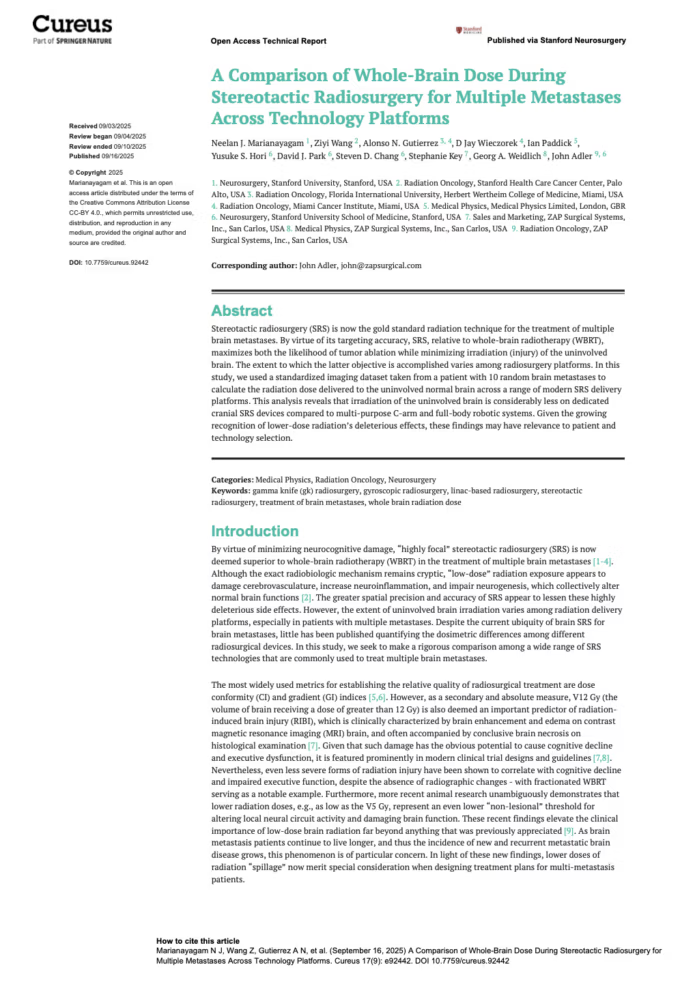
*Marianayagam NJ, Wang Z, Gutierrez AN, et al. A Comparison of Whole-Brain Dose During Stereotactic Radiosurgery for Multiple Metastases Across Technology Platforms. Cureus 17(9): e92442. doi:10.7759/cureus.92442
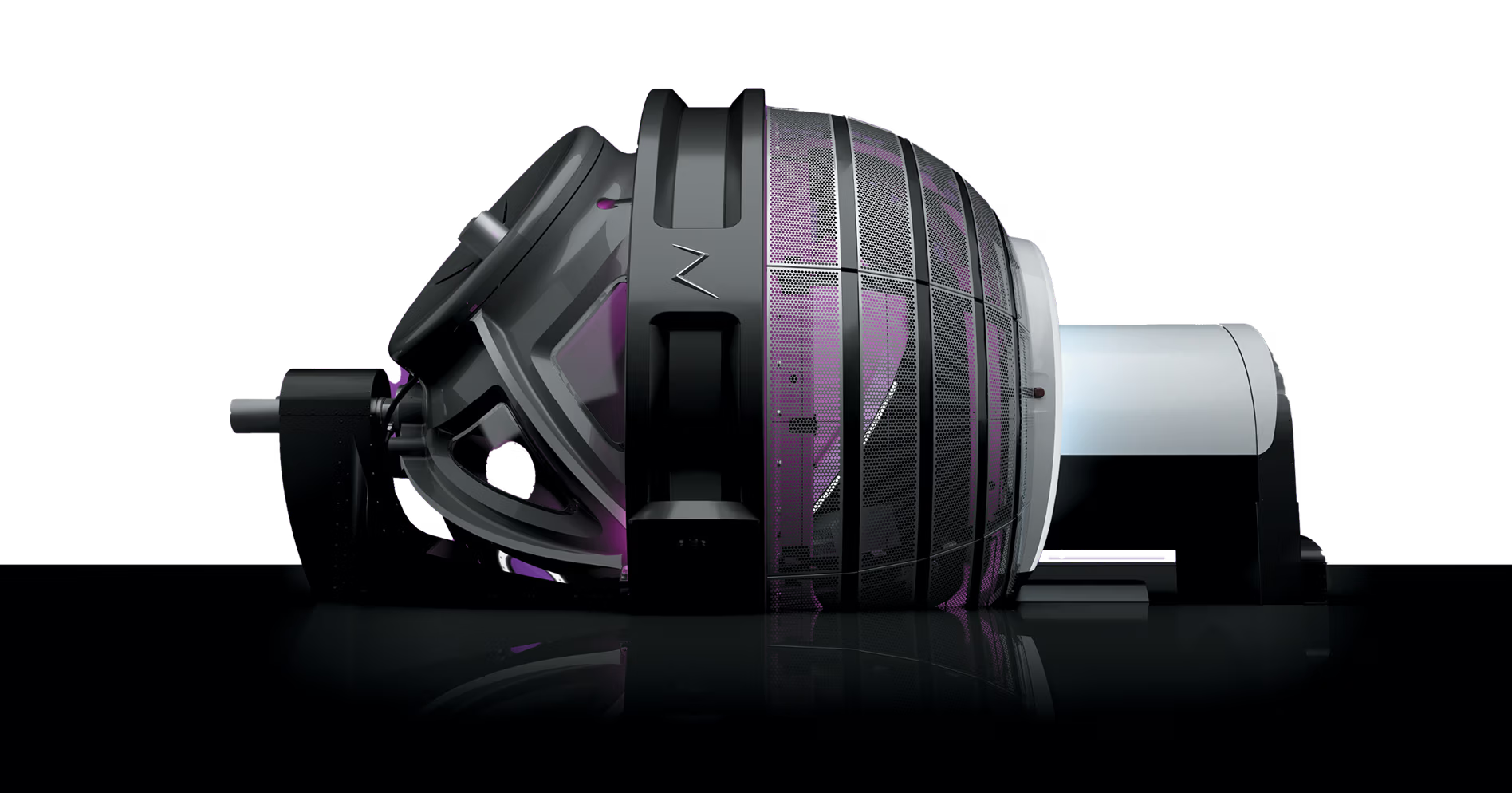
Explore the ZAP-X® Gyroscopic Radiosurgery® platform.
MK-20881 / ECO-001769